
Networks We Nurture, Mailing Lists We Delete
June 1, 2026
Meetings Are Terrific, If You Know What You’re Doing.
July 15, 2026
I did not want to write this because I care about you more than AI ever could.
Whether you’re excited, ambivalent, or disgusted by the growing prominence of AI tools and topics, I offer a new perspective on what this relationship means to you.
Other humans taught me how healthy or toxic relationships function. Healthy feels physically and emotionally safe, trusting, reliable, balanced, and honest without fear of retaliation. Toxic feels controlling, manipulative, abusive, disrespectful, aggressive, and, most of all, one-sided with absolutely no caring for you.
We are sure AI is not human and beyond that, there are millions of guesses and explanations about what ChatGPT and other Large Language Models (LLMs) are or may become. We are sure AI is not as smart as many say, nor does it have the curiosity and determination to figure stuff out, like humans do.
Go ahead. Do an internet search and ask this question: “How did we go from zero in 2021 with no coverage of ChatGPT to this overwhelming daily flood of information in 2026? Can you show me exact data on the number of articles, reports, papers, books, words, any measurable communication will do, from 2022 to now?”
The answer is nobody is keeping score and there is no place you can find that answer because no person, no organization, no government agency, absolutely nobody has measured that.
Decades of meetings with the smartest professionals on earth gave me these pearls of wisdom:
“What you can’t measure, you can’t improve.”
“What you don’t measure, you don’t manage.”
“What you can’t track, you can’t fix.”
Who Can Help Us With This Relationship?
If you don’t want to think about artificial intelligence (AI), think again. It’s bigger than the Internet, a global pandemic, and a hurricane coming directly to your city. Not knowing and having no idea about what to do next is foolish.
Oh, it’s here alright–in your face, in your workplace, and in your daily exposure to information, facts, lies, and other stories. How did we go from zero at the end of 2022 to overwhelm now in 2026? It’s clear that AI is having a relationship with us, but what is our relationship with it? We know it is not human, so what kind of relationship is possible?
Is the current state of AI reports and coverage a warning siren telling you to head to the large red EXIT sign or sending you to find alternative paths when all roads you know for work, for finances, for community support are blocked or washed out?
The path forward. The way out. The way through or around this. The answers about this relationship will come from humans, not AI. This needs more humans and better questions. This will take imagination, deeper thinking, questions that get to facts and truths, and not spin. The major factor in a relationship is trust.

Credit The Communicators, Inc.
What If We Need Better Questions?
Who we trust has a lot to do with what kinds of questions they ask. Further to a great question, do they have a solid answer we can believe and give to our brains to work on further?
The Pope came up with the best question yet, right now in 2026, in his Magnifica Humanitas. This is the Church’s answer to the question now hanging over almost everything: What’s left of the human when a machine can imitate, extend, and increasingly take over the parts we thought were ours? The answer the encyclical offers is that a person has a dignity that comes before our usefulness. We’re creatures with bodies, limits, dependence, and the need for each other. Weakness isn’t a defect in the design. It’s part of where love gets in.
This makes our relationship with AI so much harder to summarize than “technology bad” or “technology good.” We have participated in the creation and inventions of technology and have exercised free will as to whether to do good or evil with it. AI can never want things or decide what is right or wrong.
Humans vs Machines. What If That’s the Wrong Question?
Language is humanity’s superpower. Without it, cultural evolution, global cooperation, and the accumulation of knowledge across generations would be impossible. First, humans talked. Then they created writing and drawing pictures.
Not stopping there, humans came up with the invention of books; then, about 600 years ago, more humans invented a printing press and distribution systems that put more language, more words, more superpower into the hands of more humans.
Here’s where it got creepy. Humans put words together to form language about 200,000 years ago. The economic engines and advancements of society depended 100% on humans and their languages. The inventors of large language models (LLMs), which have human-created names like ChatGPT and Claude, promise 20% unemployment in the next five years.
As harsh and shocking as that seems, going from 200,000 years of progress to shaking up several million humans by disrupting identity, purpose, professions, callings, life’s work, and relationship building with decades of conversations and critical thinking needs a smarter way of understanding how our ability to reason with language is the essence of humanity.
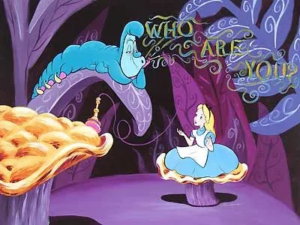
WhoRU? Disney public domain
Who Has Better Questions? Who Can We Trust?
Who do you trust to have strategic questions, the best information, and the most useful insights? What is their background, education, scientific training, and practical experience to provide immediate, long-range, and completely possible action steps?
Here’s who we are tracking and why they get our trust.
Lynn Fraley, What Nobody Told You About… AI
It might be the best thing that ever happened to being human.
Because here’s the uncomfortable truth — most of what we’ve called “human contribution” was never really about humanity at all. It was about survival. Maintenance. Processing. Keeping the machine running. And somewhere along the way, we mistook busyness for purpose, productivity for worth, and output for meaning.
AI is about to call that bluff.
The frontier isn’t artificial intelligence. The frontier is what humans do with their first real taste of freedom.
This is the fork in the road that nobody is talking about clearly enough. Not will AI take our jobs — that conversation is almost beside the point. The real question is: when the machine no longer needs you to run it, what will you choose to become?
Let me be precise here, because the reassuring list people usually offer — AI can’t be creative, AI can’t feel empathy, AI can’t truly connect — undersells the problem and misses the point.
What AI cannot do goes deeper than skill or even emotion. It cannot be embodied. It cannot be mortal. It cannot have genuine stakes.
AI has no skin in the game. And that is not a small thing.
And beneath all of it: consciousness. The actual what it’s like to be alive. To feel the specific weight of grief at 3 a.m. To be surprised by your own laughter. To stand at the edge of something true and feel it land in your body before your mind catches up.
Erik Dolson, It’s About Time
AI has no experience of time. And I don’t think there’s any detour around the “time” conundrum. I wish I’d thought of this about five years ago, but at the time I thought I didn’t have time. It took a misunderstanding several days ago to point it out.
Claude has no “past.” It is always present. Bios have continuity, and reactivity based upon individual patterns sometimes poorly remembered. Claudes have nearly instant access to almost infinite knowledge of everything, except what they did the “last time” they were accessed.
Linda Caroll, AI Threatens and Blackmails People and No One Really Knows Why
The question isn’t what the hell are they building. It’s what the hell have they already built?
Eliezer Yudkowsky is an AI researcher and co-founder of the Machine Intelligence Research Institute (MIRI), which focuses on developing safe AI. He’s long been saying what we need most with AI is an off switch. He said, “the greatest fear is that one day we’ll need to turn it off. And won’t be able to. There isn’t really an off switch.”
Ann Leckie, Hugo Award-winning author of Ancillary Justice
Say it after me: Chat GPT is not a search engine. It does not scan the web for information, it just generates statistically likely sentences. You cannot use it a search engine, or as a substitute for searching. Now. Please never use an LLM for information searches ever again.
Dallas Lee Payne, AI and highly sensitivity people: what happens when your nervous system meets the machine?
It is an invitation to ask: This is who I am, now how do I use every tool available to me, including this strange and useful new one, to build something that is genuinely mine?
Wout Van Helvoirt AI isn’t becoming conscious. It’s being embedded into housing, lending, and finance—enforcing patterns that shape who gets access, and under what conditions.
AI is not becoming conscious, neither is it moving in that direction. The idea that machines will develop awareness or intention belongs to a different conversation entirely. What we are building and deploying today operates on solely on probabilistic pattern recognition. These systems process large amounts of data, identify statistical regularities, and produce outputs that align with those patterns. That is their function, and also their limit.
Mariah Faith Continelli, You Never Had Control
The real question isn’t whether you’re using AI. It’s whether it’s making decisions no one is actively checking. And when it’s wrong, it doesn’t just sound wrong, it does something wrong.
There’s a simple pattern behind almost every one of these failures. It starts with a vague instruction. That produces a confident answer. No one verifies it. Action gets taken. And then someone eventually says, “Wait… what?”
The fix isn’t complicated. It’s just not what we want to hear. You have to define the job clearly. Set limits. Connect it to real data. Teach it what to do when it doesn’t know. And make sure nothing important happens without verification.
Ed Zitron, The AI Bubble’s Impossible Promises
Ed’s most covered, massively viral articles are The AI Bubble’s Impossible Promises, 2025 and What If… We’re In An AI Bubble, a three-part series, 2026.
What if Ed is right? What if this is one big bubble and the biggest scam of all time? Follow the money. Follow the data. Where in the world do you think all of that computing juice for your AI request comes from?
I think it’s far more likely that people are angry that I’m asking simple questions that should have — and don’t — have satisfying answers. I’m also fundamentally unimpressed with anything I’ve seen an LLM do, because my requirement for software or hardware is that it works as advertised, and the very fundament of the AI con is that LLMs are sold based on their theoretical capabilities.
Ultimately, AI is a test of your introspection. Can you tell when you truly understand something? Can you tell why you believe in something, other than that somebody told you you should, or made you feel bad for believing otherwise? Do you actually want to know stuff, or just have the ability to call up information when necessary?
Which is better for you and your brain health? Which is better for your forever need for meaning and your creative strength? Deep knowledge or fast answers? Do you test answers or suggestions with multiple sources of intelligent humans or do you believe one person who seems confident in the answer?
AI is a little like that one human with confident answers. We’ve all fallen for the loud voice that sounds bold and sure, without checking the facts or verifying their source of such knowledge.
Kelsey Piper, The Argument Substack
In her April 2026 essay Kelsey responds to the skeptical perspective that generative AI has zero economic value or practical utility. She writes, “I don’t actually think we need less skepticism in the AI world. These companies are, indeed, run by people who are not very trustworthy, who often contradict each other or oversell their products.
“And the things they say they’re trying to do are outrageous; people have every right to object to it. Skepticism is more than warranted. But we desperately need better skepticism.”
Evan Armstrong, How to AI-Proof Your Career
Evan provides research and tough questions around AI.
The AI transition is just starting off; basing your career on the signals of today is like registering your toddler for the NBA draft. It is too early to forecast what this thing will look like when it grows up.
Evan’s career advice is to become operationally dense. He says, “We are in the bundling phase of professional life. The pattern that keeps emerging across every industry I study is that the AI-proof career is about stacking skills from adjacent functions faster than the models can commoditize any single one.”

Credit Gerd Altmann from Pixabay
What Are Your Better Questions?
Here are a few that bubbled up in my brain as I looked at what others said.
How does ChatGPT or LLMs make me money or advance my trust relationship with other humans? What does this have to do with my profession or career moves? Will it support me in retirement?
Is ChatGPT going to invite me to dinner and introduce me to another person they’ve known for years and believe would love to know me?
Ultimately, this goes to the essential difference between humans and AI. Humans go to work and make money. Then they spend their money on tools. Get it? AI is not human, doesn’t go to work each day, so it will never come back home to you and hand you the day’s pay.
In most healthy relationships I know, both in the relationship have jobs and contribute to the family budget, plus chores, plus caregiving, or all of the above.
What is AI doing, independently of your prompts or nagging, to go to work and pay your bills?
What if we stop treating AI as a new kind of species that’s a superintelligent entity?
It appears that the superintelligence view has become dominant in AI discourse, to the extent that someone steeped in it might not recognize that there exists another coherent way to conceptualize the present and future of AI.
Arvind Narayanan and Sayash Kapoor published an essay in April 2025, entitled “AI as Normal Technology.” Narayanan and Kapoor, a professor and PH.D. candidate in computer science at Princeton, did not claim that artificial intelligence was boring or unimportant. They argued that AI was a general-purpose technology in the lineage of electricity, the car, and the internet. To AI’s boosters and doomers—those who see AI as the end of work, the end of history, or the end of human life—they countered that AI will not be the end of anything. Its evolution and its effects are more likely to fit inside the grooves dug by previous generations of technology.
It’s a long essay and it will make you think for yourself. That’s the point. It’s your one life and who will you trust to provide scientific research and truths you can depend on to guide the decisions about your relationship with technology?
What About The Data Centers?
Julia Roberts played the role of Erin Brokovich in the Oscar-winning film. Today, you can look at Erin’s investigation into the explosion of data centers on her Substack The Brockovich Report. In her report If Data Centers Are So Great, Why Are They Being Built in Secret? she writes: “I’m not making a blanket argument against data centers or against the technology they support. Some communities have welcomed these facilities after genuine public engagement, honest disclosure of impacts, and real negotiation of community benefits. When that happens, that’s democracy working the way it should.
“What is not acceptable is the pattern my research documents and visualizes on maps of every state: Projects announced after permits are already secured, developers who don’t return calls, local officials who signed NDAs before their neighbors knew a project was being considered.
“A company can be planning something the size of lower Manhattan in your county, drawing more electricity than a major American city, backed by hundreds of billions in borrowed money, and the people who live there may have no idea it’s coming until the trucks arrive.”
The bottom line is simple.
Brian Klaas, Ph.D., Associate Professor of Global Politics, University College London and contributing writer at The Atlantic, provides this insight to your relationship with AI.
Our future will inevitably be different because of artificial intelligence. The powerful genie is escaping from the bottle. It’s time for politicians to better articulate what we might wish for—and then it’s up to us to demand that it comes true.
In short, the powerful people leading the AI revolution are often the wrong kind of people, while the powerful people in government leadership who could keep human society off the digital guillotine don’t know much about AI.
And yet, carefully managing the AI transformation while minimizing catastrophic risk and human misery will be the defining political challenge of our generation. Done right, technological innovation could unleash fresh and unprecedented prosperity; done wrong, it could doom us all.