

Brains at Birth
February 17, 2026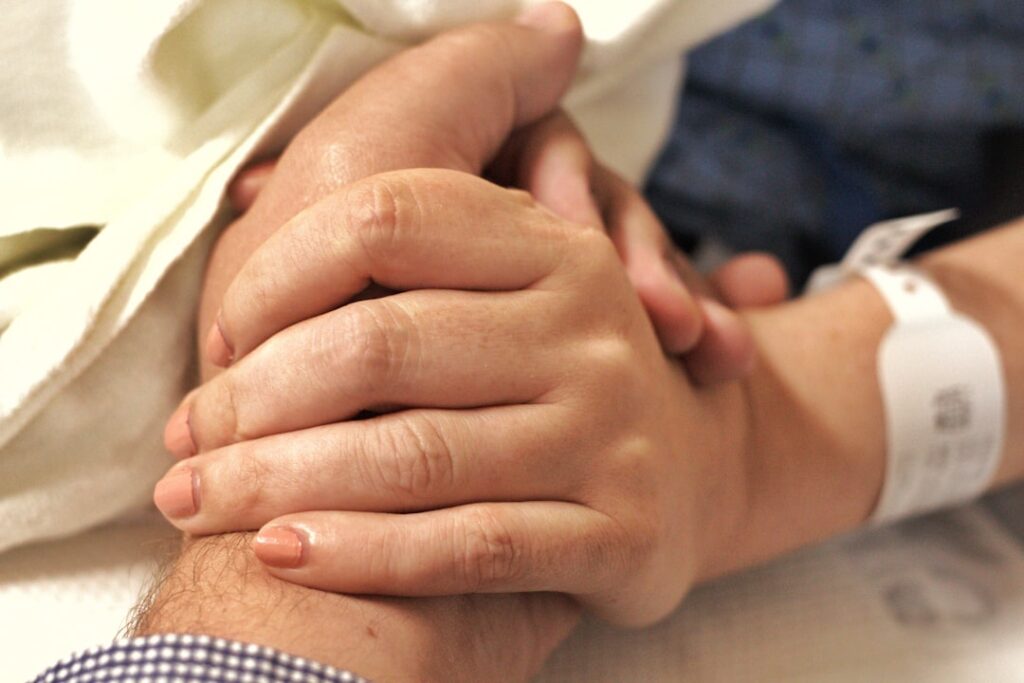
What happens to your life and work when you become a caregiver?
A fourth and intensely important conversation has invaded our community and it’s time to talk about it and notice it in others, if it is not overwhelming your every thought and action now.
For five years we’ve built a community dedicated to deeper dives in three, tightly connected areas–professionalism, communication, and giftedness in adults. Only here and nowhere else can you find all three explored, discussed, and understood as we do.
Let’s start by giving that fourth conversation a name – Life and Grief. Let’s also agree to listen more deeply to hear each other and notice the swift current running beneath what starts as questions and stories about work, careers, intelligence, communication, and highly sensitive, fast-thinking, high-energy adults.
Because our community attracts and serves professionals past 45, there’s greater emphasis on starting a solopreneur business, leaving a legacy, retirement projects, pulling out all the stops, and figuring out what productivity and artificial intelligence has to do with all of this. In the same breath, there is expressed emphasis on health, finances, changes in socialization, and who we want in our network and support system. More often than not, death and caregiving surface in these conversations because it’s right in front of us, right now. There’s no more “someday” or delay. It’s here.
How Many of Our Members Have Caregiving and Grief Stories?
More than you know or may have noticed, just about everyone in our community has an intense, life-altering story about grief they are not writing about. Well, barely. Do we not bring it up because we think nobody will care or because we are still scrambling to figure it out and not ready to admit we lost our way?
Katherine Merritt is gifted professional and communicator in our community with wisdom about life and grief. We are featuring an article she published this month because her story of caregiving will resonate with those of you who have experienced it. For the rest of you, not thinking about it, just know it’s coming for you. That’s right. Everything you thought was so essential is about to shift, and then you need to find your way back home–back to yourself and your dreams delayed.
Katherine’s story applies to men and women, even though she writes her letter for the woman who set her dreams down somewhere and forgot where she left them. The men in our community also write about caregiving, the death of a spouse or family member, and what comes next. It might be more severe for men because they wrap so much of their identity in their profession, their job, and their family. That may explain why men don’t say much about it. That doesn’t make it less felt or less experienced.
My several years of experience with this taught me that caregiving is a serious, complicated, and responsible job, like any professional role you choose prepare for and practice for decades. It’s the job you feel least qualified to do and the one that has the most consequences, opportunities, and life and death decisions. More than any previous position you accepted. More than any position you chased after or strived for.

Credit Ajay Karpur on Unsplash
You Set It Down So Gently You Didn’t Hear It Go
A letter for the woman who set her dreams down somewhere and forgot where she left them.
by Katherine Merritt, Health Counselor and Creator of Soul Lettersby Ageless Awakenings
I was standing in my kitchen sometime after my mom passed when I understood that my dreaming had gone missing.
Not recently. It had been gone for years. The absence had simply been quiet enough that I’d stopped noticing it.
Somewhere between fifty-six and sixty-two, the lights had gone out in rooms I used to live in. And I had just… adjusted to the dark.
There was no big announcement. No ceremony. Just a quiet, gradual withdrawal, like a tide going out so slowly you don’t realize the shore has changed until you look up one day and the water is gone.
It started with caregiving. I spent five years caring for an aging woman in her home, watching her needs deepen as my own quietly shrank. At first, my dreams were still alive. I could still feel them moving inside me like something warm and mine. But as the years wore on, the fire grew dimmer.
By the time my mother’s decline began, I was already halfway emptied. There was no pause between them. One care ended and another began, and somewhere inside that seamless giving, the last of my dreaming went silent.
Dementia had moved into my mother’s body like a second tenant, rewriting the rules of the house. My world became her world: the medications, the vigilance, the slow grief of watching someone you love become someone you don’t recognize. There wasn’t room for what I wanted. There was barely room for breathing.
When you are keeping someone safe and alive, your own dreams feel obscene.
Who has the right to want something for herself when the person she loves doesn’t even know her own name?
So I stopped. Not dramatically. I just… set it down. The wanting. Imagining. The small, private fire that used to whisper there is something more for you. I set it down so gently I didn’t even hear it go quiet.
Eventually, my mother needed more care than my body could give. We found her a place where she would be safe, where kind hands would do what mine no longer could. I visited her often. I held her hand. I told her I loved her. And I watched her move further and further from the woman who had raised me.
The last time we saw her was January 21st, 2018, her 81st birthday. We brought a cake. We sang Happy Birthday. We sat with her and just… were there. There was no way to know it would be the last time. That we were already in the middle of a goodbye, we didn’t recognize as one.
She passed away one week later. I was getting ready to go back to see her when the call came.
I won’t pretend I didn’t feel relief. I felt it for her first, and then, slowly, honestly, for myself. She was finally free from the confusion, the fear, the body that had stopped being home to her. That kind of relief doesn’t cancel the grief. They just live side by side, the way love and loss always do.
In the year or two following mom’s death, in the strange, spacious silence that followed, I realized something that sat like a stone in my chest.
I had given up on my dreams so completely that I couldn’t even remember what they were.
I didn’t just postpone them. I didn’t just put them on a shelf. I had let them go so thoroughly that the shelf itself had disappeared. The room where they used to live had been converted into storage for someone else’s needs.
And standing in that empty room, I felt a sadness I didn’t have a name for.
Maybe that room is familiar to you.
Maybe it wasn’t dementia. Maybe it was a marriage that required all your oxygen. A career that rewarded your competence but never once asked what you actually wanted. Children who needed everything, and a version of you that believed good mothers don’t have their own dreams. Decades of choosing the responsible thing, the necessary thing, the thing that kept everyone else breathing.
Maybe you didn’t decide to stop dreaming. Maybe it just became too expensive. Too selfish. Too dangerous to want something you couldn’t guarantee.
So the lights went off, one by one, in rooms you used to visit. And after a while, you forgot those rooms existed.
Until one day, something flickers.
It might be small. A book you can’t put down. A conversation that stirs something unnamed. Someone else doing the thing your hands used to itch for, and a pang that moves through your chest like a bird trapped in a house.
Oh. There you are.

Credit Vitaly Grieve on Unsplash
The dream didn’t die. It just went underground. It was smart enough to go quiet when the environment couldn’t hold it. It didn’t leave you. It just stopped asking for what you couldn’t give.
And now maybe something in your life has shifted. A role ended. A door closed.
A season finally turned. And the dream is testing the air.
Is it safe to come back?
Here’s what I keep seeing, in myself and in so many of you.
The moment the wanting starts to return, the first thing most of us do is apologize for it.
Not out loud, usually. Internally.
Is this selfish?
Am I allowed to want this at my age?
Who do I think I am, starting to dream again at sixty-eight?
We treat our own desire like an uninvited guest. We rush to explain it, justify it, minimize it. We say sorry before we’ve even said the thing.
This is the old training speaking. The script that said our value was in being useful, low-maintenance, uncomplaining. The belief that wanting something for yourself was a luxury you hadn’t earned. The quiet rule that made your needs feel like an inconvenience, first to your family, then to the world, and eventually to yourself.
So we learned to apologize for being hungry.
And now that the hunger is returning, the apology is so automatic we don’t even hear it anymore. It sounds like I should be grateful for what I have. It sounds like it’s too late to start. It sounds like I should focus on what’s realistic.
Every single one of those sentences is an apology dressed as wisdom.
So here is what I want to offer you this week. Not a plan. Not a vision board. Not a grand declaration.
Just this: Notice where you apologize for wanting.
Not just out loud. The internal ones. The I shouldn’t that arrives before the thought was even finished. The it’s too late that lands on the wish before it has a chance to breathe.
Each time you catch it, try this: let the desire stand for five seconds without editing it. Don’t act on it. Just let it exist in the room without apology.
See what happens when you stop saying sorry for being alive.
The lights don’t have to come on all at once. Sometimes it starts with one room. Sometimes it starts with just noticing you’ve been sitting in the dark.
And sometimes, that noticing is enough to change everything.
With you in the noticing,
Katherine
Soul Letters by Ageless Awakenings