
They Don’t Know What They Want. And They Won’t Be Happy Until They Get It.
January 22, 2026
A full-time job you didn’t study for and you can’t quit
March 29, 2026
Giftedness and Starting Gate Advantage
As you watched the Winter Olympics this month, did you notice that the gold, silver, and bronze winners may differ only by a fraction of a minute, inches instead of meters, and a total score combination of technical excellence (skill) and style (performance)?
What does this have to do with human giftedness and brain science?
What if hundreds of years of believing that some humans are born with brains that are gifted, right out of the starting gate, and stay that way through life is not true? How does this shake up the conversation and everything we believe about ourselves and about others if the science, the hard evidence, the most recent research tells us two profound facts?
First, it’s true that some humans are born with brains that have several measurable indicators that say “genius” and “most likely gifted.”
Second, and here’s where the proof around neuroplasticity kicks in. That genius brain may have a one-minute or one-mile start out of the gate at birth, but everything that happens after the advantage of the start determines if this human ends up with the gold, silver, bronze, or nothing medal for a lifetime of experiences, learning, relationships, and circumstances.
Welcome to the Community of Tough Questions Instead of Easy Answers
When we created the community and safe space for deep discussions among Gifted Professionals and Communicators, we encouraged maverick behavior and thoughtful questions about giftedness, plus professionalism, plus communications.
We’ve been delighted to see members and subscribers come forward with thoughts, articles, books, and push-back questions that make us all dig deeper into our perceptions and frameworks for how we show up in the world, our communities, and our most meaningful relationships.
We have big questions and I hope you do, too. Email me and put your thoughts in the comment area as immediate ways to step into the conversation.
Let’s go behind the scenes and show you provocative points from the community.
Agree, disagree, show us better questions, or debunk myths. I hope these stories stir you to engage beyond “likes” and give me something you found amazing, which we can include in more stories this month, maybe all year.
Credit Vat Loai from Pixabay
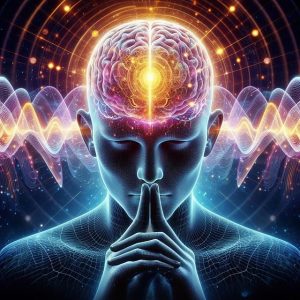
Neuroplasticity Proves Your Brain is Not a Computer
The most significant finding in brain research is that there is far more to know about the brain and giftedness than we can possibly understand because our brains have not evolved enough to go that far, that deep, that much. Oh, for sure, we have moved extremely fast with science and technology in the past million years, but the human brain has not evolved at that same pace.
Don’t get me started on artificial intelligence because it’s not the topic here and it’s still dependent on human hands on keyboards. Those human hands are attached to the brain, still governed by evolutionary time.
When humans invented computers, we believed we knew something about brainsand used computer metaphors to describe what we understood about brains at birth, learning, and cognition in terms of hard wiring, central processors, and software. In recent history for humans, the 1980s and 1990s, we gained a scientific understanding of the brain’s ability to reorganize itself by forming new neural connections throughout life and call it neuroplasticity.
The scientific understanding of neuroplasticity matured in the late 20th century. Its profound implications for understanding and developing human intelligence, including giftedness and genius, became a widely discussed and popular topic in the past 25 years after the mainstreaming of books and media articles on the subject.
It shifted the narrative from a fixed intelligence to a more dynamic, growth-oriented view of the brain.
This threw gas on the fires of debate about “nature vs. nurture.”
Are brains at birth always that way or can humans become more intelligent, more gifted, because of what the brain takes in and processes every minute of every year of life?
Neuroscience explains why twins, separated at birth do not stay at the genius level forever. Upbringing, nurturing, and access to different advantages determine how long the brain stays plastic and responsive to repetitions or habits, such as “practice makes perfect.”
Says Who?
Michael Merzenich, Ph.D., often considered the “father of neuroplasticity,” dedicated much of his career to translating discoveries into practical applications, particularly for improving cognitive performance and alleviating learning disabilities.
Norman Doidge, M.D. wrote the book “The Brain That Changes Itself: Stories of Personal Triumph from the Frontiers of Brain Science.” He is a psychiatrist, psychoanalyst, and researcher. His work goes beyond reporting on the science. He actively engages with and interprets the implications of neuroplasticity for mental health, recovery from brain injury, and human potential.
John B. Arden, Ph.D. wrote “Rewire Your Brain: Think Your Way to a Better Life.” Arden offers actionable strategies and exercises based on the principles of neuroplasticity that readers can apply to improve their memory, mood, relationships, and overall brain health. He bridges the gap between understanding the science and applying it in everyday life.
What About the Genius Inside Our Community? What Do They Say?
Our community is mostly the Everyday Genius. These are adults who don’t like to use the word giftedness and they come up with many other ways to describe their life and relationship to everything in the world. While much of the neuroscience and brain science literature tends to pay more attention to people with brain injuries, disabilities, or mental health concerns, that’s not useful to the person who experiences giftedness traits, all the time.
Ron van Helvoirt, author of What No One Told the Gifted, The Price of Clarity:; The Raw Power of Giftedness in a world That Prefers to Look Away, and creator of NEXUS: High-Bandwidth Mavericks Substack writes, “There is a fundamental difference between understanding something and being it. Between reading about it and having lived it. Giftedness is not a format. Not a step-by-step model. Not a revenue stream. It is a way of perceiving that structurally alters how you relate to the world. Those who have not lived that shift can describe it — but they cannot carry it.”
Paula Prober, psychotherapist, consultant, and author of Your Rainforest Mind books, blogs, and Substack, has worked for 35 years with gifted adults and parents of gifted children. We think she does a bang-up job of helping everyone understand Being Highly Gifted Isn’t Always A Gift but what about the brain at birth?
We are digging for the origin story. How can we say someone is gifted and when did that happen? In the womb or in the world?

Abiot Yenealem, neuroimaging researcher and creator of Esteem Note Lab Substack, explores the most compelling data on the mind, emotion, and identity, moving beyond optimization hacks of pop-science. He was the most helpful and most specific in answering the question: Are gifted humans born that way or not?
Here’s what Abiot told us and we’re holding on to this as the best truth, until someone else in our community, our subscriber base comes forward with better, clearer, and most useful to the Everyday Genius like you and me.
“Your brain is not fixed, like hardware. What happens at birth and every day of your life determines how long the brain stays plastic and responsive to upbringing and nurturing.
“Yes, being gifted has a biological basis shown in MRI scans. The genetic contribution to it is polygenic, which means the combined effects of many genes of small effects.
“Children with a higher Intelligence Quotient (IQ) remain open to environmental shaping longer than those with an average IQ. That is why the environment (nurture and nature) is critical and determines whether their genetic gifts reach their potential. This is why a child born gifted in an impoverished environment is less likely to show their exceptional talents in the long term.
“Giftedness is prolonged developmental plasticity, not simply “more” of something in the brain. Genetic association of giftedness is about extended plasticity, not an innate trait or static structure.
“In a 2021 UCLA study gifted children showed fundamentally different memory system organization, indicating distinct neurodevelopmental trajectories from birth.
“There is undeniable evidence for a significant genetic component to intelligence and giftedness. Individuals are indeed born with genetic predispositions that give them a head start or a higher potential for certain cognitive abilities.”
Use It Or Lose It
Back to you and the original question. Are you in it to win it? Are you going for gold, silver, bronze, or here to live your potential and make a difference in someone’s life? If you have advantages and you know it or suspect your differences are your superpower, what are you doing?
Do you have more appreciation for giftedness and more grace for yourself as you learn more about how you came into the world and what comes next?
Perhaps you are a gifted human because you were born with a brain that had a higher potential and perhaps some initial structural/functional differences that conferred an advantage. However, your initial blueprint is not a static destiny. Sustained giftedness throughout life is the result of your initial potential being actively developed and shaped by ongoing neuroplastic processes throughout your existence.
The “brain you were born with” provided a powerful starting point, but it’s the “brain that is nurtured and developed” that defines lifelong giftedness.
-30-
We’re on a mission to feature stories about professionals who are initiating meaningful conversations with other gifted minds and storytellers—and who they serve.
My clients are experts who don’t need more information. They need decisions and a system that matches their brain to turn ideas into stories and stories into NOW results. Not “someday” and not “after I feel ready.” Start with my Contact page to see how this works and the path forward for you.