
2025 Winner of In-Your-Face, Daily Deluge, Confusing Content
December 31, 2025
They Don’t Know What They Want. And They Won’t Be Happy Until They Get It.
January 22, 2026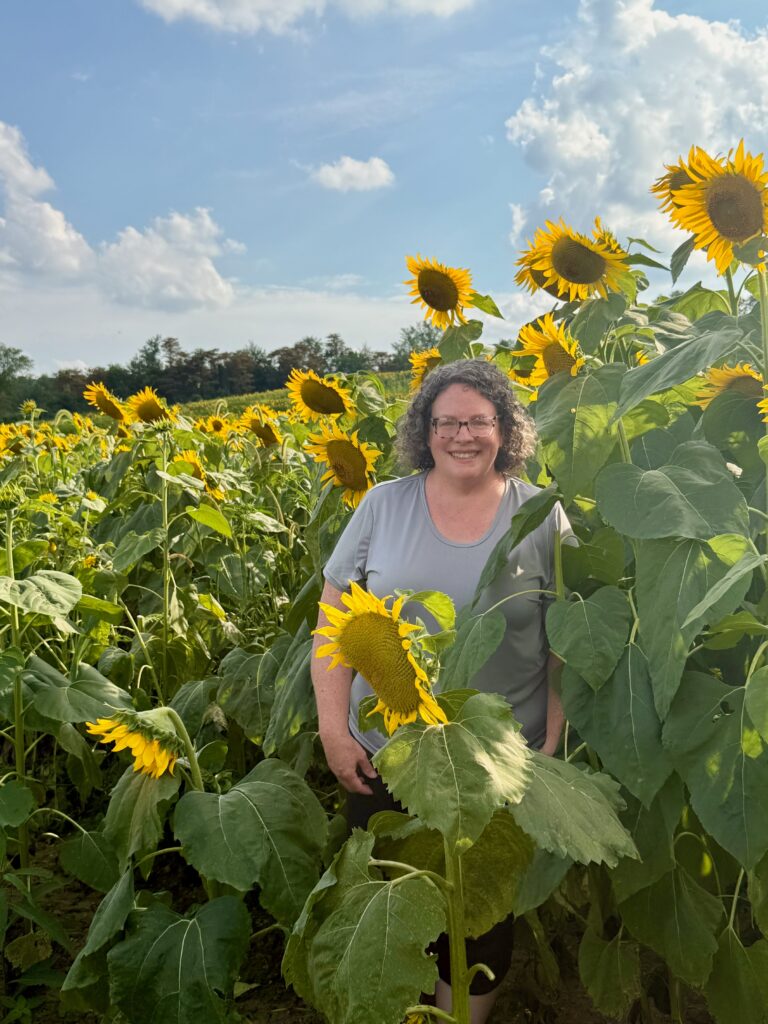
Probably both. If you are a highly sensitive idealist, activist, and creative with ambitious goals
Warning: Content may cause sudden clarity and extreme joy, awe, and belief in humanity.
Meet Lori L. Cangilla, Ph.D., psychologist and founder of the Singularly Sensitive approach to therapy for gifted adults and the Highly Sensitive Person (HSP). She’s an active member of the Gifted Professionals and Communicators Community and helps us stay focused on the story instead of getting caught up in the jargon and terminology of high intelligence vs giftedness vs HSP vs 2e adult (gifted and learning difference).
All professionals in our community come with credentials, such as degrees, certifications, accreditations, and licenses to practice. Forest therapy? Is that real? It’s as real and rigorous as more than 20,000 other certifications, most of which you couldn’t name, and all backed up with training, examinations, and continuing education requirements.
Our story about Lori starts with how she sees herself as she became more comfortable and confident with who she is and what she wants to accomplish, ultimately.
Lori: I’ve always been lost in my head, captivated by stories and words and images. I’m passionate about discovering how people, societies, and natural phenomena have grown, changed, and will continue to grow over time. My sensitivity and sense of profound, spiritual interconnection with all beings (human and non-human, the environment and the land itself, across time) have driven me to feel passionately about working for healing, justice, and non-exploitative, reciprocal growth.
I recently completed my certification as a Forest Therapy Guide, which brings together so much of what I love as a professional. I get to use my passion for writing in the form of crafting invitations for people to interact with nature in fresh, creative ways. I guide people in using mindfulness skills to unlock new paths to personal and professional growth. I’m facilitating people developing reciprocal, life-enhancing relationships with the nature that’s around them, which can lead to reduced ecological anxiety and greater environmental advocacy.

Credit Jesse Gardner on Unsplash
Why is forest therapy vital to you as a psychologist and writer?
Lori: This allows me to nurture my own connection with the non-human natural world and gives me energy and fresh perspectives on how to support and communicate with people who are committed to growing and making a positive impact on the world. Being in deep connection with natural spaces, with trees and animals, is the place where I feel most fully myself and where I draw inspiration for the work I do.
How is this working for you in the challenges of your life?
In addition to Lori’s Singularly Sensitive Substack , website, and blog, she sends email messages to people asking to get on her mailing list. The last week of December, she wrote Gently, Defiantly Claiming the Light in 2025. In it she wrote, “It’s taking all my energy to not fall into cynicism and bitterness as 2025 winds down. Without a doubt, this has been the worst year for my country in my half-century of life. There’s no shortage of reasons to rage, and I do plenty of that. I’m not going to let the fascists take my joy, my wonder, my hope, my belief in humanity’s potential.
“It’s been a monumental task to bring myself back to this intention over and over, one horror after another.”

Credit Stefan Keller on Pixabay
What have you always done with ease and grace? What comes to you naturally and seems to be magic or more difficult for others to do?
Lori: Three things are fundamental parts of who I am, that show up in the world in a way that looks natural to others: imagery/symbolism, compassion, and advocacy.
Let’s walk through each of those three as you explain this magic to others.
About imagery/symbolism: My brain easily recognizes symbolism, imagery, metaphors, and deep interrelationships between seemingly disparate bits of stimuli. I also draw heavily on symbols and archetypes that reflect broad, sometimes universal, human experiences. My imagination is always active in these ways.
I write, I think, and I communicate orally using these easy-for-me connections, and they help others appreciate the world as I experience it. I’ve had people tell me this helps them make connections, too, and understand their experiences in fresh ways. That’s served me well as a writer and as a psychotherapist and coach.
About compassion: I’m wired to feel profound compassion for other people and the non-human nature of our universe. Self-compassion is a lot harder for me. I’ve learned to consciously cultivate more empathy and understanding for myself, rather than listening to internal and external criticism.
I know that I’ve never been criticized or belittled into making any lasting changes in my life, and I believe the same is true for other people. I’ve become adept at holding compassion for my therapy and coaching clients as a means of helping them gradually learn to cultivate more compassion for themselves.
I think that people who work with me can sense my compassion for them and thus feel safe to try to new things. My compassion also leads me to see myself in relationship with the rest of nature, not as someone distinct from nature. And that compassionate relationship with nature influences how I see humanity’s place within a wider tapestry of nature.
About advocacy: My compassion drives me to be a voice for the underdog, and I use my natural proclivity to communicate with images/symbols to drive that advocacy. For me, advocacy starts with honesty with people, organizations, and systems about what needs exist, what injustices are transpiring, and what visions I and others have for change. Not surprisingly, a lot of my advocacy is behind the scenes, working to change structures from within or working to raise awareness and communicate an alternative vision.

Credit Vitaly Gariev on Unsplash
Do you remember how old you were when you started doing what became part of your professional life later?
I don’t recall ever not being someone who was drawn to the new kid at school, the underdog, the “hopeless” cause. My heart has always been on my sleeve, even when I used to try to be less sensitive because that was the culture in which I was raised, which said to toughen up and mind my own business. I’ve always written as a way to advocate for myself and others. I’ve always been just as deeply connected to a grove of trees as a group of people and felt the same grief for a clear-cut mountainside as for saying goodbye to a person.
Gifted Awareness
Q: Is this true for you? Because you are a deep thinker, highly intuitive, creative, analytical, and curious, you bring a particularly complex dimension to professional relationships.
Lori: Absolutely! I’ve found that this complexity is welcomed by certain professionals, whereas it has been perceived as unnecessary or as a challenge to authority structures in other relationships/settings. It didn’t take me long to realize as a working adult that I couldn’t show up as anything other than a gifted professional.
Professionalism Emphasis
Q: Did you become a professional on purpose or did your career path open a door into the profession you identify with today?
Lori: From the time I was in elementary school, I knew I wanted to be a professional because I associated it with expertise, complexity, working in a way that I felt passionate about, rather than to serve someone else’s agenda. If anything, my early academic and professional years were driven too much by agendas of whichever professor was advising me or professional supervisor I worked for. I’ve found myself redefining professionalism throughout the middle stage of my career and I expect to continue doing that more in the later years of my career. I think that’s a privilege and a responsibility, and I’m loving it.
Communication Emphasis
Q: Which of your communication skills do you seem to work on constantly, always learning, always evolving?
Lori: All of them. I view communication as a fundamentally relational process, so there’s never a one-size-fits-all approach or the ability to stagnate.

Credit Dean Moriarty on Pixabay
Words to live and laugh by
The power of quotes and rhetoric is part of a GPC member’s thinking. These are words Lori lives by and uses with clients to make clear what she teaches them.
“Everything can be taken from a man but one thing: the last of human freedoms—to choose one’s attitude in any given set of circumstances, to choose one’s own way.” ~ Viktor E. Frankl
“Those who contemplate the beauty of the earth find reserves of strength that will endure as long as life lasts. There is something infinitely healing in the repeated refrains of nature—the assurance that dawn comes after night, and spring after winter.” ~ Rachel Carson
“Love empowers us to live fully and die well. Death becomes, then, not an end to life but a part of living.” ~ bell hooks
“Remember always that you not only have the right to be an individual, you have an obligation to be one.” ~ Eleanor Roosevelt
“My bursting heart must find vent at my pen.” ~ Abigail Adams
-30-
We’re on a mission to feature stories about professionals who are initiating meaningful conversations with other gifted minds and storytellers—and who they serve.
If you’re curious about how sensitive, creative, intense, multi-potential, professional, ethical, expressive, and clear you are about your intentions, wants, and needs, check your GPC score.