
I no longer require my ducks to be in a row.
September 8, 2026
caregiving + grief + community = love
Everyone’s story will have chapters devoted to caregiving and grief.
Looking away doesn’t make it go away. Not knowing or not learning about it before it hits usually results in your turn as caregiver or as the grieving person still living somewhere between numb and intense emotions.
It would be easier and more fun to write about high-click topics such as writing success formulas, wealth, and the latest books for self improvement and happiness. None of that is worth squat when we become the caregiver or when grief moves in with us like an uninvited stranger.
This is a story about caregiving + grief + community = love.
For the past six years I’ve listened to hundreds of stories about caregiving and grief. For the past five years I’ve been building a community, which is one way that love, in a new and expansive form shows up.
As I introduce storytellers who have more extensive and deeper experiences with caregiving and grief than we may ever know, please notice the one thing that runs through their articles, books, and interviews. These are stories of unconditional love and entering new phases of their life that need them as connectors with other humans and builders of communities.
Everyone at the midlife stage, may already have caregiving stories and grief journeys, and be willing to share them. Younger people may still be doing what thirtysomethings do best and that is to negotiate with reality, thinking, That’s not going to happen to me. Or, I’m the exception to everyone’s rules. Or, I can have it all if I get some big breaks.
Once you become a caregiver for another human, you notice other caregivers. Before then, you live in a reality created by others that made you believe you are an independent actor, solely in charge of your own destiny.
Once you are consumed by grief that comes with the death of a living being you loved and returned love to you, you notice others in grief. Before then you were living in a story you created for yourself, usually without limits of time and the entirely possible immediate.
Some of us experience caregiving which ends with death and then enters the grieving. Some people don’t know what to do about grief. Some people find their capacity to love is even bigger than what it took to live the double life as caregiver and then to carry the responsibilities of grief plus executor of the last will and testimony.
My story expanded love and human connections from the world I knew to create and grow a global community of Gifted Professionals and Communicators (GPC).

Credit Miroslav Kacik from Pixabay
These stories are from the exceptionally talented, loving people in our community
One section in our GPC Substack is Life & Grief. The first story when we started that section is the March essay, A full-time job your didn’t study for and you can’t quit What happens to your life and work when you become a caregiver?
How Many of Our Members Have Caregiving and Grief Stories?
More than you know or may have noticed, just about everyone in our community has an intense, life-altering story about grief they are not writing about. Well, barely. Do we not bring it up because we think nobody will care or because we are still scrambling to figure it out and not ready to admit we lost our way?
Because our community attracts and serves professionals past 45, there’s greater emphasis on starting a solopreneur business, leaving a legacy, retirement projects, pulling out all the stops, and figuring out what productivity and artificial intelligence has to do with all of this. In the same breath, there is expressed emphasis on health, finances, changes in socialization, and who we want in our network and support system. More often than not, death and caregiving surface in these conversations because it’s right in front of us, right now. There’s no more “someday” or delay. It’s here.

Can you write so well that every story pulls the reader into your experience without compromising their boundaries or personal space? Katherine Merritt does that. She is the creator of Soul Letters by Ageless Awakenings and in You Set It Down So Gently You Didn’t Hear It Go this experience is so universal, it could be you:
I was standing in my kitchen sometime after my mom passed when I understood that my dreaming had gone missing.
Not recently. It had been gone for years. The absence had simply been quiet enough that I’d stopped noticing it.
Somewhere between fifty-six and sixty-two, the lights had gone out in rooms I used to live in. And I had just… adjusted to the dark.
Caregiving as double life is not limited to people who look after small children.
Rosie Spinks, creator of What Do We Do Now That We’re Here wrote Wellness for caregivers, Finding the practice when you can’t practice.
This double life applies to all suspended between two poles. One asks us to perform a distinctly modern version of adulthood that says we’re independent actors, solely in charge of our own destiny. The other holds the deeper truth: That entire idea is a fiction, and always has been.
This matters also to those who are taking care of aging parents, or aging parents and small children at the same time; people who live with disabled adult children; people who have children with more complex or demanding needs than society says they should have; people caring for sick partners.
More importantly, there are many more people in challenging caregiving situations that we have not mentioned because we don’t know who they are. Chances of them coming forward and saying “I’m still here” are unlikely because society and the economy at large send a harsh message that’s hard to miss: All people living the double life of caregiving don’t count.
Grief is tough enough. What makes it worse is the overload of online content which also influences what people in your network may say, plus what comes from millions of other people who remain faceless and nameless in a world of algorithmic incentives benefiting for-profit companies, also nameless and faceless. The online conversations are full of tips, lists, products, experiences, and retreats you can buy for self care and wellness.
My experience with grief is that when a lifelong human in your life dies, you need humans, not a brochure on the five stages of grief. By the way, that five-stage thing is not what happens, and it can make things even worse if you get too deep into self-focused and independent.
Rosie’s story works for me and maybe for you too. What helps and what is true, I discovered in my double life of high-performing adult and caregiver or grieving person (all the same because it’s about losing myself in a place I’ve never been before), are these realities:
- Nothing is perfect.
- I don’t have to panic and think that this is my life forever.
- This isn’t personal. I’m interdependent with all beings and someone has the support I need.
Credit Lily Jedynak,Ph.D.
Katie Couric, who knows the double life of caregiving and grief, introduce me to Nancy Howard Cobb, author of In Lieu of Flowers: A Conversation for the Living.
When Katie interview Nancy, she said that she got a lot of grief books when husband Jay died. Nancy’s book was the best of all, Katie said. Click here for the interview.
Mary Roblyn writes stories, not articles. Big difference. Stories feel familiar and like arms around you. Articles feel like someone across the street holding up a sign or shouting at you. In her story All Things Must Pass Grief is one way we grow, Mary’s point is time and how it plays through life and grief.
How do you deal with the hard things in life? You know: the grief that feels overwhelming, but can be the wellspring of a new life. Letting go of beloved companions, when you desperately want them to stay. Reaching a milestone — birthday, anniversary, retirement — and finding it more complicated than you thought it would be.
Mary’s husband died about the same time my husband died in 2023. Both of us share the experience of marriage for decades, and we still thought we had more time. We share the experience of watching an active life reduced to wheelchair mobility and hospice care to the end. We also share a title we never wanted (widow) and still think it doesn’t go with the rest of our outfit for the day.
Like me, Mary is past 70 and a professional writer. She immerses with nature and writes about the sensations of nature, including light, temperatures, sounds of the sandhill cranes. My husband, a wildlife habitat naturalist, would spend the whole day driving to Nebraska to where he could watch and photograph massive flocks of sandhill cranes.
Mary is a terrific writer. Never will there be a chatbot that has seen, felt, touched, smelled, heard what Mary describes in words unmistakable for what she means.

Photo by Stephanie Klepacki onf Unsplash
caregiving + grief + community = love
Kate Van Name is a storyteller who brings the feelings of grief to a level only possible by living inside the story everyone will, eventually, tell. Kate elevates us to the only possible solution for going on and getting up the next day, and it’s community plus dialogue with humans.
Community is everything to Kate and she means it the way we build it and practice it in the community we’ve formed for adults in their years of greatest transformations, experiments, discoveries, disappointments, and new relationships.
In her story Permission if Not Wisdom, she starts her story with the phrase we hear too much when others don’t know what else to say, which is “Are you okay?”
Because we don’t want to be a burden to others or we were taught to say nothing if you can’t say something nice, the person who is grieving or living the double life of caregiver plus who I was before this happened, says, “Okay.” The response inside our head may be screaming, “Of course I’m not okay and that’s the wrong question.”
Kate’s story covers the feelings through different experiences and she arrives at the same point where all of our stories about caregiving and grief land: We need company and we need a community.
We don’t get into the world on our own and we certainly want someone who loves us there when we reach the end. Throughout our lives, we need people who have learned to “read the room” and notice when something has changed. We need to be seen and we need stop feeling uncomfortable with tending to another’s suffering or double load double life of caregiving.
Maybe, you think, Kate may be speaking to me when she writes, Because the truth is, almost nobody reaches the end of a dock by accident. People drift there slowly. By grief. By loneliness. By exhaustion. By the thousand small untended things that accumulate when nobody has asked how you are doing in a very long time.
You’re not doing grief wrong. You were never taught how to meet your grief.
Uma Girish, creator of Light After Loss substack, covers grief from every angle possible. That’s why you can start anywhere in her archives and find understanding and meaning.
In 3 ways we avoid our grief–and why it’s not working, she goes immediately to the big reality that you can’t escape.
As a culture we’re grief-illiterate. Many of us don’t have the emotional vocabulary to name what we’re feeling. That’s not an accident. We were raised by parents who belonged to a generation where survival was the highest purpose.
If you as a child were crying, they had to find the quickest way to shush you—so they could get on with their never-ending list of chores. So they said: “Stop crying or I’ll give you something to cry about” or “Don’t be so sensitive.”
Grief is not a sprint; it’s a marathon. It takes stamina and staying power.
That’s why the community building is the core of my being and business. That’s why networks of real people matter more than screens, keyboards or bots. That’s why the GPC Community is not about transactions; instead, it’s about relationships, dialogue, and collaborations.
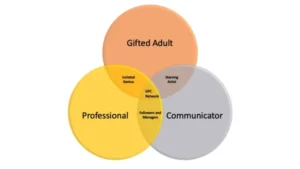
Somebody Just Got Here Today
If you’ve been in our community since the beginning or for more than a year, we thank you!
If you just found us today, paddle over to the GPC page and find the two-point JOIN form at the bottom of the page.
Professionals and communicators choose to join when:
- They don’t want a process — they want lived experience transferred
- Their opportunity or issue isn’t clearly defined enough for a goal-oriented coach
- They want someone who has actually been a small business owner, a nonprofit director, a storyteller, a corporate officer — not someone trained to ask questions
- They’re navigating a transition so unfamiliar that they need a trusted guide who has crossed that terrain, not a methodology
- They want a relationship that can evolve over time, not a 90-day engagement