
The Hero’s Journey, Part Three: The Road Back Isn’t Backward
August 19, 2026
Grief is Love Creatively Going Everywhere
October 10, 2026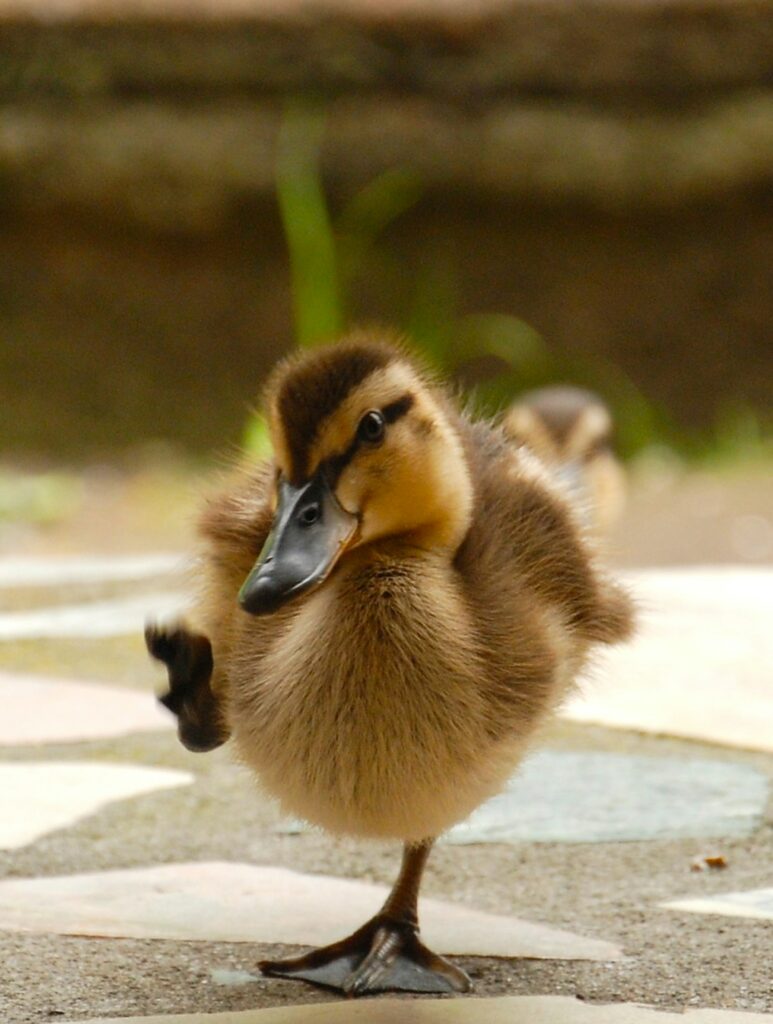
I would, however, appreciate a reasonably accurate head count.
Organizing ourselves and keeping our heads on straight is exhausting. For normal adults this is a daily struggle to referee the many voices that never cease inside our heads with the many voices, sounds, and sensations outside our heads.
We want to live with meaning and joy. We want to connect with others. We are curious about everything. We want to feel safe, loved, and needed.
For adults with gifted brains, we pile on additional requirements for daily living, including responsibility for community welfare and global hunger, for capturing sunsets and sounds others miss in our attempts to draw and play music, for intellectual challenges while avoiding boredom, and for feeling like “not enough” and “too much” at the same time.
As much as I want to connect with you, I must be myself, and that takes much time and energy to create understanding and the bridge between your mind and mine. I’m not going to slow down and you are not going to take on one more thing, so how in the world will “keep it together” to get some world-changing thing done?
Humans Want Stories, Not Articles
Even lately, with the added confusion and noise about AI, I must remind you that thinking has never depended on writing in the first place. Long before books were common, people developed, refined, and passed on complex ideas through conversation, storytelling, and shared experience.
Instead of telling you about a gifted mind and what it’s like inside my head or perhaps inside yours too, it’s time for a story. Come with me for a delightful journey inside the mind of Kate Van Name as she creates a fresh new story about daily living and the many decisions and desires we seem to pack into every day that we get, here on earth.
I Know Where Most of My Ducks Are
I make the coffee, I sit down, and I have a list. The list is reasonable. It holds perhaps six things, all of which one adult could plausibly finish before dark. I look at it with the calm confidence of a woman who has apparently learned nothing from the previous fifty-seven years, because somewhere between the coffee and Item One, a duck wanders off.
I do not know when we decided ducks were the right picture for having one’s life in hand. “Get your ducks in a row,” we say, meaning organize yourself, attend to your affairs, and stop treating the dining room table as a filing system. It is fine advice with one fairly large problem. Have you ever watched ducks? I have, most recently from the bulkhead at Rock Hall harbor, and I can report that they are not in a row. They are barely participating in the same activity.
Say there are eight of them. One is under the dock and has been under the dock for some time, for reasons she has not shared. Two are chasing each other in tight circles for reasons that appear deeply personal. One is upended, tail in the air, working on something on the bottom with enormous seriousness. One is asleep on a piling with her head tucked under a wing, and has no idea any of this is going on. One is following a workboat toward the ramp on the theory that somebody aboard might have bread. One is bathing with the frantic focus of a man removing evidence before the authorities arrive. And one has drifted forty yards down the harbor on the current, entirely by accident, and only now looks up and wonders where everybody went. Somewhere nearby a gull who has nothing to do with any of this has appointed himself regional director. This, I have concluded, is a far more accurate model of adult life. My ducks are not in a row, but I know where most of them are, and I consider that progress.
In theory, one of them is in charge. She is the consulting duck, and she owns a clipboard, which is how you can tell. Most mornings she starts with real work about leaders and organizations, and she asks sensible questions. What are we trying to accomplish? Who owns this? Then a client says something like, “We have never actually written down how an order gets from the front desk to the shop floor,” and the consulting duck goes very still, the way a heron goes still when something moves in the shallows. Nobody writes it down. The duck knows this. It is most of the reason anyone calls us in the first place. But that sentence is her favorite sentence in the world, and within forty-five minutes there are three whiteboards, a flowchart that has turned the corner and started down the hall, and a man named Ray who has done it the same way since 1998 and, it turns out, has been quietly holding the whole place together.
She is delighted, of course. A gap has appeared, and she treats a gap as a personal invitation. If two people in the same building describe the same process two different ways, she cannot pick one and paddle on with her day. She has to find out why, and there is always a former manager, a software change, or a small fire in 2011 that nobody mentions. By lunch I am doing something much more interesting than what I sat down to do. This distinction has shaped most of my career.
Unfortunately, she shares the pond with several writers, and this has been a serious management problem. The loudest of them believes nearly anything could be a book. A conversation could be a book. A sentence overheard in the checkout line at Redner’s could, under the right conditions, require seventy-two thousand words and an introduction. She will appear while the consulting duck is finishing a perfectly respectable piece of work and whisper, “But what if the real problem is not the leader at all? What if it is the motion?” Well. Now we have a framework.
Worse is the one who does not have the decency to announce herself. I can be driving the back road through Galena, passing a white church whose steeple was plainly added later by a different committee, and she sits straight up. “There.” There what? “That church.” Yes, it is a church. “No. Somebody won an argument.” And there goes the afternoon, because the essay-writing duck has taken it. The song-writing duck is the least predictable of the three, since she speaks in fragments. She contributes one line and disappears. One line, usually while I am driving, or in the shower, or in the middle of a conversation with the Post Mistress. She has never once kept office hours. She thinks 11:47 p.m. is an excellent time to discuss internal rhyme.
Somebody has to read other people’s manuscripts, which would be fine, except the publishing duck cannot read a manuscript without also worrying about its margins. She paddled in last and is already a problem. Hand her a friend’s memoir and she will tell you it is lovely, and also that the chapter titles want small caps, and she will mean both. There is also a whisky duck, and yes, I know how that sounds. My husband and I run a small side business doing tastings and barrel picks, and the whisky duck cannot taste anything without needing to know the shape of the still, where the water came from, and what the barrel held before it held this. Somebody hands her a glass and says, “Nice.” She says, “Nice how?” She then explains cooperage, unasked, to people who came out for a nice evening.
Meanwhile, there is a house, which seems unreasonable. The house has developed an astonishing dependency on maintenance. Filters apparently have schedules. Laundry, despite decades of technological progress, remains unable to move itself from the washer to the dryer. There is a domestic duck assigned to all this, and I have concerns about her performance. She is frequently standing in a room with no idea why she entered it. She does remember, usually after leaving. She also believes that putting something somewhere “for now” is a storage system. I have things that have been somewhere “for now” since the Obama administration.
By late afternoon somebody is hungry, and the recipe duck opens the refrigerator and sees not food but a competitive cooking program. We have half a rotisserie chicken, a jar of Old Bay, a lemon, some leftover rice, and a bag of spinach on its last legal day. A normal person would make chicken and rice. The recipe duck finds this offensively unimaginative. What if the lemon went in the rice and not on the chicken? At what point does “a casserole” become “things I put in one dish and hoped”? These are important questions. This is how dinner becomes research.
You can be having a perfectly normal day when someone mentions that there used to be an amusement park at Tolchester. This should be survivable. It is not, because the historical duck, whom nobody invited, now wants to know when it opened, which steamboats brought the crowds over from Baltimore, whether there really was a roller coaster on the bluff, and why the whole thing closed. Four hours later we know a surprising amount about Chesapeake excursion steamers, and nothing on the list is done. But we know things, and I cannot entirely regret it.
Driving anywhere has its own hazards. The civic duck, who is related to the consulting duck though the relationship is strained, cannot pass a dark storefront without wondering about the lease. She cannot see a new sign at the edge of town without wanting to know who approved it. She cannot hear someone say, “They ought to do something about that,” without asking the dangerous follow-up: “Who is they?” She has sat through enough public meetings to know that “we’re looking into it” is not a unit of measurement. Every trip contains fieldwork. Leaving town should help, and it does not, because the traveling duck believes geography is just curiosity with mileage. A road sign becomes a question. A building becomes architecture, architecture becomes history, and history becomes who settled here and why, and that becomes, somehow, why a town has two banks and no pharmacy. Eventually the consulting duck is back with the clipboard. This can happen before we reach the hotel.
There is a birding duck as well, and she has been unhappy with this essay since the third paragraph. That was a laughing gull at Rock Hall, not a seagull, and she would like it noted that the distinction matters. Nobody asked her.
“I just want to look up one thing.” This is how the most dangerous duck begins, and every researcher knows it is a lie. There is no one thing. There is the thing, then the thing behind the thing, then the odd footnote attached to the thing, then the report cited in the footnote, then the discovery that the report leaned on a study done twelve years earlier by two graduate students and a grant. Now it is dark outside. We have eaten nothing. But by God, we know where the number came from.
At some point in the day I notice that none of these ducks is doing what I assigned her. The consulting duck is reading about steamboats. The book-writing duck has stolen something the consulting duck said and turned it into a chapter. The song-writing duck has written six words and is demanding praise. The domestic duck is still in the pantry. The recipe duck has bought another kind of cheese. The birding duck refuses to help with the seagull because she has already told us what he is and will not say it again. And the gull himself is screaming that this meeting could have been an email.
This is usually the moment I am tempted to believe I need more discipline. Systems. Folders. Possibly labels. I need to get my ducks in a row. Except I am starting to suspect the row is the wrong goal.
Out here, the Shore does not believe useful things move in straight lines. Rivers bend. Tides turn around and come back. Boats tack. And ducks do not line up because someone decided a row would be more efficient. They gather. They separate. They investigate. They double back. They lose sight of one another and end up together anyway. There is movement without choreography, and that may be closer to what a curious life looks like.
I have worked with leaders long enough to know the difference between disorder and complexity. From the outside they look remarkably alike. Disorder has no connective tissue. Complexity has a great deal of it. That may be what I misunderstood about my ducks. Consulting leads me into systems. Systems lead me into towns. Towns lead me into history, and history hands me stories. Stories become essays and books, a phrase becomes a song, a glass of whisky becomes a lecture nobody requested. Travel gives it landscape and cooking gives it a table. A broken thing in the house reminds me that philosophy is lovely but somebody still has to figure out why the toilet is running. It turns out to be one life with extremely poor lane discipline, and I rather like it that way.
I do not want a mind that walks obediently from Item One to Item Six and never notices the church in Galena. I do not want to stop asking where the number came from. Curiosity is inefficient. This is probably why nobody has managed to fit it on a quarterly dashboard. It takes the back road. It asks one more question after everyone else has packed up. It notices the church. What the Shore already knows is that efficiency is a terrible way to measure the richness of a life.
I no longer require my ducks to be in a row. I would, however, appreciate a reasonably accurate head count.
At present, the consulting duck is working. The book-writing duck is pretending not to listen. The song-writing duck has wandered off with a phrase she refuses to explain. The domestic duck has remembered why she went into the pantry and found something in there that needs reorganizing. The recipe duck wants Parmesan. The historical duck has found a footnote. The traveling duck has located a ferry. And one duck has disappeared entirely. I am not worried. She does this. She will return in about three hours with seventeen browser tabs, an obscure PDF, and something she insists I absolutely need to know.
As for the seagull, he remains outside the organizational structure. He has contributed nothing. He has attended every meeting. And somehow, inexplicably, he is now chair of the board.

Kate Van Name and Ducks