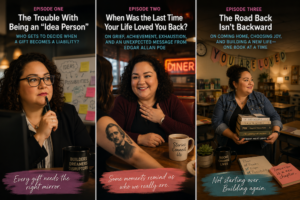
The Hero’s Journey, Part One: The Trouble With Being an “Idea Person”
August 17, 2026
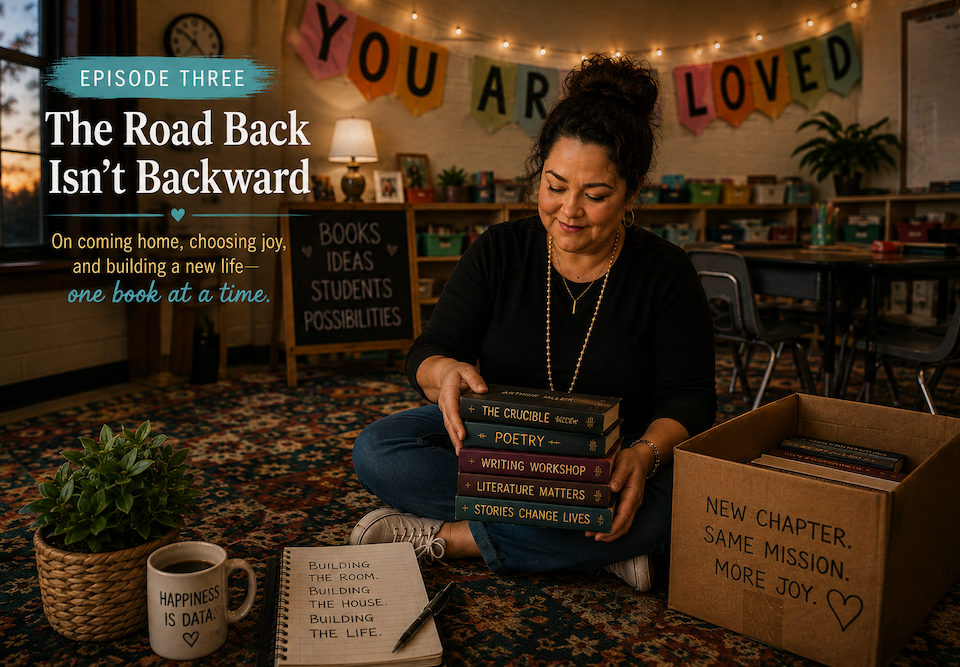
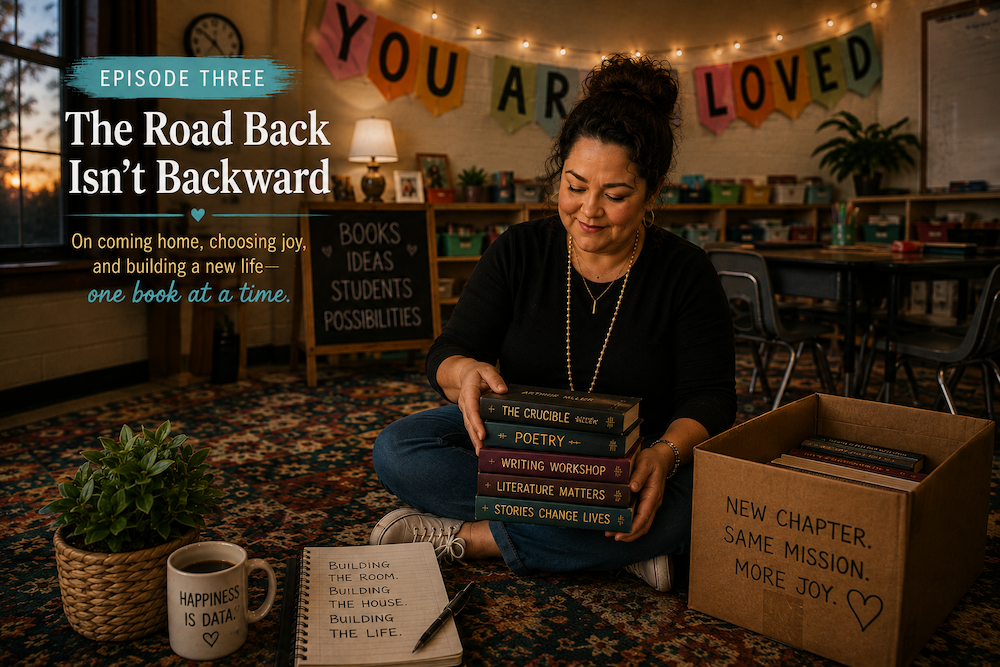
The Hero’s Journey, Part Three: The Road Back Isn’t Backward
August 19, 2026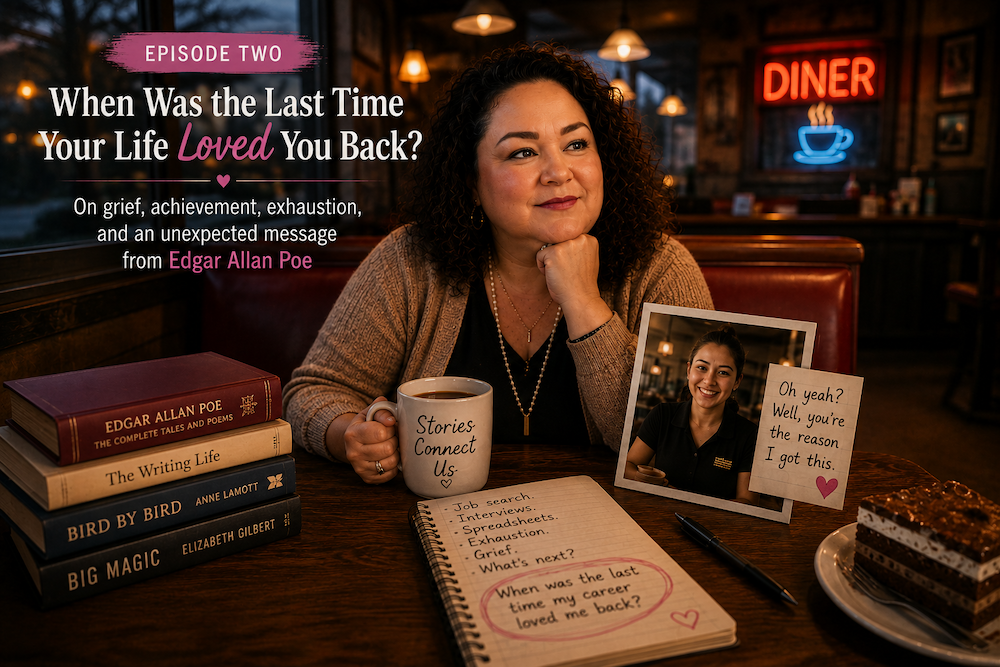
On grief, achievement, exhaustion, and an unexpected message from Edgar Allan Poe
We heard you. You want stories, not articles. Your brain is a story machine, seeking patterns and structure. This is a story from inside the world and mind of an origin founder of the GPC Community. Follow along for the whole adventure in three episodes:
One – The Trouble With Being an “Idea Person” (August 17)
Two- When was the last time your life loved you back? (August 18)
Three- The Road Back Isn’t Backward (August 19)
By Brianna Schwenk, GPC Origins Author
When something devastating happens, high-achieving people know exactly what to do.
We make a spreadsheet.
At least I do.
My position had been eliminated.
My marriage was ending.
My sense of home was changing.
My professional future was uncertain.
So naturally, I decided this was an excellent time to become extremely productive.
I was going to find the next thing.
The next leadership position.
The next title.
The next organization that needed my particular combination of curriculum nerd, systems thinker, relentless optimist, grant writer, communicator, problem-solver, and professional disturber of well-enough.
I interviewed.
I built portfolios.
I wrote cover letters.
I researched organizations.
I made 90-day plans for jobs I did not have.
I imagined myself in new offices.
I kept moving.
Because moving feels a lot like healing if you don’t examine it too closely.
Grief Is an Unimpressive Strategic Planner
I was exhausted.
Not regular tired.
Not “I could use a vacation” tired.
I was the kind of tired that reaches your bones.
My professional world was unraveling at precisely the same time that my personal life was doing the same.
And because apparently the universe enjoys thematic consistency, I was being asked to reconsider nearly every structure I had used to define my adult life at once.
Career.
Marriage.
Home.
Identity.
Achievement.
Future.
No pressure.
I kept applying for administrative positions because that was the logical thing to do.
I had spent nearly ten years in administration.
I had accumulated experience.
Responsibility.
Expertise.
Leadership.
I had climbed.
And ambitious people understand climbing.
Up is good.
Down is bad.
This is Career Development 101.
You don’t spend ten years ascending a ladder and then announce:
“You know what sounds fun? Several rungs down.”
Particularly when several rungs down also comes with considerably less money.
So I kept looking upward.
But something was wrong.
Every opportunity I considered seemed to ask me to pour more of myself into it.
And I had almost nothing left to pour.
Eventually, somewhere in the middle of all those applications and interviews and spreadsheets and attempts to engineer my next chapter, I finally asked myself a much simpler question.
When was the last time my career loved me back?
Not when was I most important.
Not when did I have the biggest title.
Not when did I make the most money.
Not when did I have the most influence.
When was I happy?
When did my work pour something back into me instead of only taking?
I knew the answer almost immediately.
The classroom.
Dammit.
Enter Edgar Allan Poe
Not long after that realization began rattling around in my brain, I went to a local diner with a friend.
Our server looked familiar.
Then I realized why.
She had been my student.
Fifteen years ago.
Which, first of all, is rude.
Former students are supposed to remain seventeen forever so their teachers do not have to confront the relentless passage of time.
But there she was.
Fully adult.
Living her life.
Waiting on our table.
After she walked away, I started telling my friend about her.
She had been such a special kid.
I remembered how she came out of her shell during our unit on The Crucible.
I remembered her writing.
I remembered encouraging—or, more accurately, voluntelling—her to join the Speech team.
She was a rockstar.
I was happily reminiscing, completely unaware that she could hear me.
Then she came back to the booth.
“Oh yeah?” she said. “Well, you’re the reason I got this.”
And she rolled up her sleeve.
On her delicate bicep was an enormous tattoo.
Edgar Allan Poe.
Five inches of gloomy nineteenth-century literary magnificence staring back at me.
I lost it.
She explained that sometimes people don’t even know who the tattoo is.
“Because their English teacher sucked, apparently.”
And there it was.
The universe, not known for subtlety, had sent Edgar Allan Poe into a diner to slap me across the face.
I looked at this former student—this grown woman whose life had intersected with mine for a tiny fraction of both of our stories—and felt a wave of warmth rush through me.
Oh.
This is what making a difference feels like.
Not another strategic plan.
Not another leadership framework.
Not another initiative with an acronym.
This.
A human being carrying something from our classroom fifteen years later.
Literally carrying it on her body, in this particular case.
This was legacy.
This was a job loving me back.
The Refusal of the Call
Of course, recognizing the answer and accepting it are two entirely different things.
Because returning to teaching meant confronting another question:
What will people think?
I wish I were evolved enough to tell you that question never mattered to me.
It did.
I had been a district-level administrator.
A director.
I had led systems.
Supervised people.
Managed budgets.
Designed initiatives.
Advised principals.
Led professional learning.
And now I was considering going back to teaching ninth-grade English?
Was I giving up?
Was I failing?
Had I wasted the decade between my last classroom and this one?
Was I going backward?
There was also the small matter of my gifted, achievement-oriented brain having spent most of my life believing that if I could do more, I probably should.
Capability is a dangerous compass.
If you’re good at something, people encourage you to do more of it.
If you’re good at leading, lead more.
If you’re good at solving problems, take on bigger problems.
If you can carry a heavy load, someone will eventually hand you another bag.
And because gifted adults often derive enormous meaning from competence, we keep saying yes.
We confuse being able to carry something with being called to carry it.
I had.
For years.
But I couldn’t stop thinking about Poe.
About that student.
About that feeling.
About being remembered not for a strategic plan or a title or a meeting I facilitated.
But for making someone fall in love with literature.
For seeing a kid.
For telling her she was good at something.
For voluntelling her into an experience that helped her discover something about herself.
Maybe I had been asking the wrong question.
Maybe the question wasn’t:
How do I get back to where I was?
Maybe it was:
Where do I want to go from here?
I applied for a classroom teaching job the next day.
The Conversation
When was the last time your work—or your life—loved you back?
Not rewarded you.
Not promoted you.
Not needed you.
Not told you that you were impressive.
When did something you were doing give something back?
I suspect some of us know the answer immediately.
And I suspect some of us are a little afraid to ask.
You don’t have to answer publicly. That’s why we have a private conversation form inside the community for Gifted Professionals & Communicators. One question to help us see you and the story you’ve been living.
Next: Part Three — What if going back isn’t backward?
Our interview series features interesting people with something to say that the world needs to hear. Let me know what you think—we’ll continue to experiment and evolve along the way.